
Soma Mater Newsletter – 25.05.2026
Welcome to the SOMA MATER weekly newsletter.
At SOMA MATER, we deliver comprehensive research and advisory services focused on Food & Water Security and Net Zero Transition in the MENA Region. To help our clients navigate these topics and understand the regional narrative, we accelerate problem-solving and unlock new opportunities through Strategic Advisory and/or Projects.
This weekly newsletter highlights the top 3 stories from the past week in Food and Water Security and Net Zero transition, along with SOMA MATER’s analysis and perspective.
How can GCC countries build water resilience while managing growing energy costs?
How is Abu Dhabi strengthening food security by expanding local food manufacturing and supply chain capabilities?
What are the main drivers of Egypt’s move to restrict fertilizer exports?
Sustainably yours,
The SOMA team
Thirsty Gulf, Pricey Power
#FoodandWaterSecurity

Water is essential to economic and social stability in the Gulf Cooperation Council (GCC). Recent geopolitical tensions show that critical infrastructure can become a target. The GCC should treat water like energy and defense infrastructure by planning, funding, protecting, and governing it with the same level of coordination. The urgency rises as most groundwater comes from fossil aquifers with almost no natural recharge.
The gap is growing quickly and shows up in supply, sustainability, and affordability. The GCC relies heavily on non-conventional water sources, which makes water and energy tightly linked. Increasing water supply requires more power capacity. Costs also rise with more complex projects, the need to meet stricter environmental standards, and integration with renewable power. As a result, national-only planning is reaching diminishing returns, as more resilience requires more capital.
The United Arab Emirates is also testing new paths. Ma Hawa set a Guinness World Record by producing 60.75 cubic meters of potable water in 24 hours during the 2025 Abu Dhabi Grand Prix. The atmosphere holds around 12,900 cubic kilometers of water vapor at any time, around 7 times more than all rivers combined. In Saudi Arabia, King Abdullah University of Science and Technology (KAUST) demonstrated solar-driven atmospheric water extraction (SAWE) can produce about 0.65 liters per square meter per hour of freshwater at 90% humidity, and yet work in conditions down to 40%.
SOMA’s Perspective:
Innovations like these expose the region’s core constraint: more water often still means more power. With this constraint, scaling these systems risks shifting scarcity from water to energy, and importing new vulnerabilities into critical supply. The near-term win is to apply these innovations for high-value use cases.
Made Locally: The Supply Chain That Feeds the Future
#FoodandWaterSecurity
Food security efforts are shifting toward building stronger supply chains. The Abu Dhabi Agriculture and Food Safety Authority (ADAFSA) launched the “Farm to Factory” framework. It aims to strengthen food value chains and grow local food manufacturing. In 2023, Abu Dhabi’s food production sector generated $3.6 billion, almost 40% of the UAE’s total food manufacturing output.
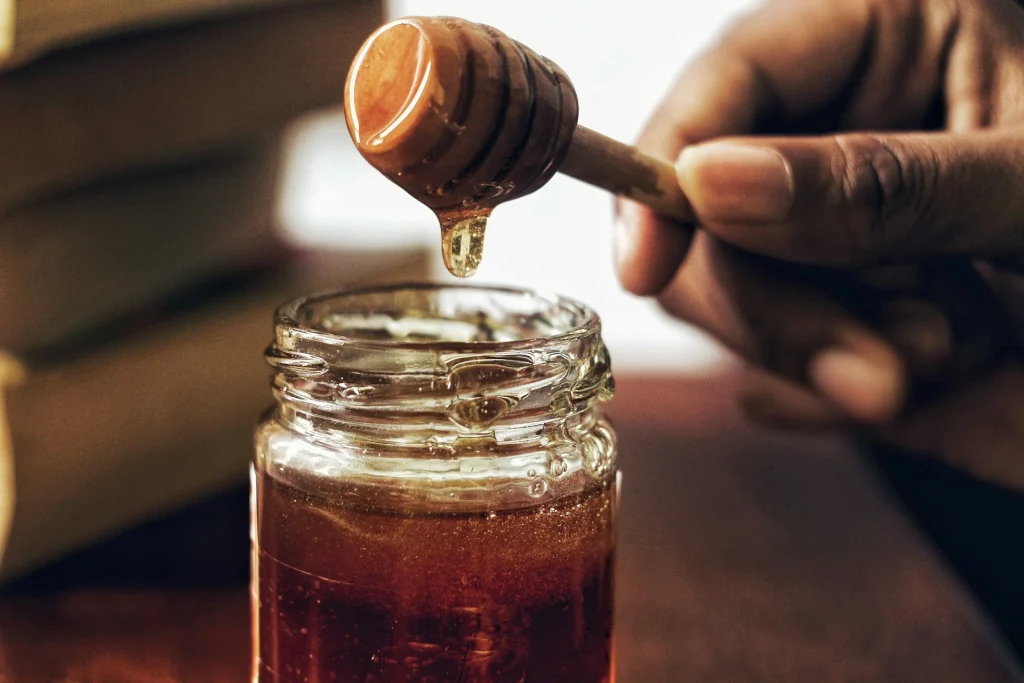
Growth has been continuous. In the first half of 2025, new food establishment registrations increased 42.2% compared with the same period in 2024. Abu Dhabi now has 26,360 active food establishments, and Small and Medium-sized Enterprises (SMEs) make up 98% of the sector. Sectors like dairy, dates, honey products, and processed meats have experienced the strongest growth in food processing.
Policy is also changing. Abu Dhabi launched a premium food classification system for locally produced chilled chicken. The new rules set stricter standards for poultry farming and packaging. Meanwhile, Dubai Holding selected 15 scale-ups for its “Innovate For Tomorrow” accelerator. It focuses on circular economy ideas, including food loss and waste. The selected companies will compete for shared prize money and pilot funding worth AED 850,000.
SOMA’s Perspective:
This is a story of strengthening food security through supply chain capabilities. There may be the belief that food security will be won less on farms and more in the middle of the value chain. Abu Dhabi will seek to create a strategic buffer that can be scaled quickly. If executed well, the emirate can become a nexus to the region for food processing.
Duty Calls: Egypt Puts Fertilizer Exports on Hold
#FoodandWaterSecurity #NetZeroTransition
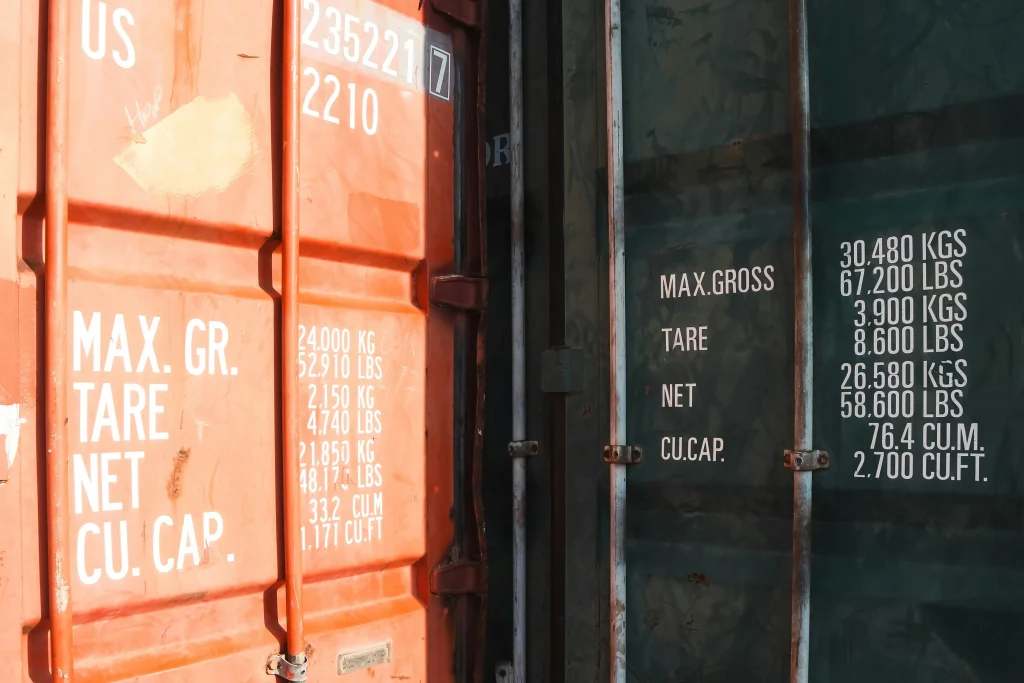
Egypt has long leaned on fertilizer exports to earn hard currency. Due to the recent Iran-war, price shocks have been forcing a shift toward securing supply locally. Cairo announced a three-month export duty (at $90 per ton) on nitrogen-based fertilizers. It seeks to prioritize Egypt’s local supply and its food security. This is also set to ease the pressure on Egyptian farmers.
Producers have seen a sharp jump in prices. Egyptian suppliers are already charging up to $890 per ton for urea. This is almost double the amount charged prior to the crisis. Usually, producers will prioritize exporting to markets like that of India, where demand is highest. The Organisation for Economic Co-operation and Development (OECD) frames Egypt’s move as an effort to contain domestic price pressures.
Historically, countries often respond to international crises with trade restrictions. It also fits a wider pattern as governments turn to trade controls in volatile periods. Research finds countries are increasingly inclined to institute trade restrictions to protect key industries. Japan’s auto sector shows how deep trade dependence can be detrimental. The disruptions in the Middle East aluminum and plastic inputs can directly affect their production.
SOMA’s Perspective:
Egypt’s export duty is signal that fertilizer has become a strategic commodity when shipping lanes close. In volatile geopolitics, trade openness is increasingly conditional, and food systems in MENA will be shaped as much by industrial policy and chokepoints as by farms.
If you’d like to know more, contact us through:
Subscribe To Our Newsletter
Categories
- Events 4
- Intelligence Reports 2
- Newsletter 27
- Uncategorized 0
- Whitepapers 6