Soma Mater Newsletter – 07.09.2026
Welcome to the SOMA MATER weekly newsletter.
At SOMA MATER, we deliver comprehensive research and advisory services focused on Food & Water Security and Net Zero Transition in the MENA Region. To help our clients navigate these topics and understand the regional narrative, we accelerate problem-solving and unlock new opportunities through Strategic Advisory and/or Projects.
This weekly newsletter highlights the top 3 stories from the past week in Food and Water Security and Net Zero transition, along with SOMA MATER’s analysis and perspective.
How could rising water-related conflicts around the world reshape regional stability in 2026?
How is climate-driven rainfall testing the UAE’s flood resilience?
How have Egypt’s fiscal pressures and shifting investment priorities changed throughout the years?
Sustainably yours,
The SOMA team
Thirst Lines: Water Infrastructure Becomes A Battlefield In A Record Year Of Conflict
#FoodandWaterSecurity
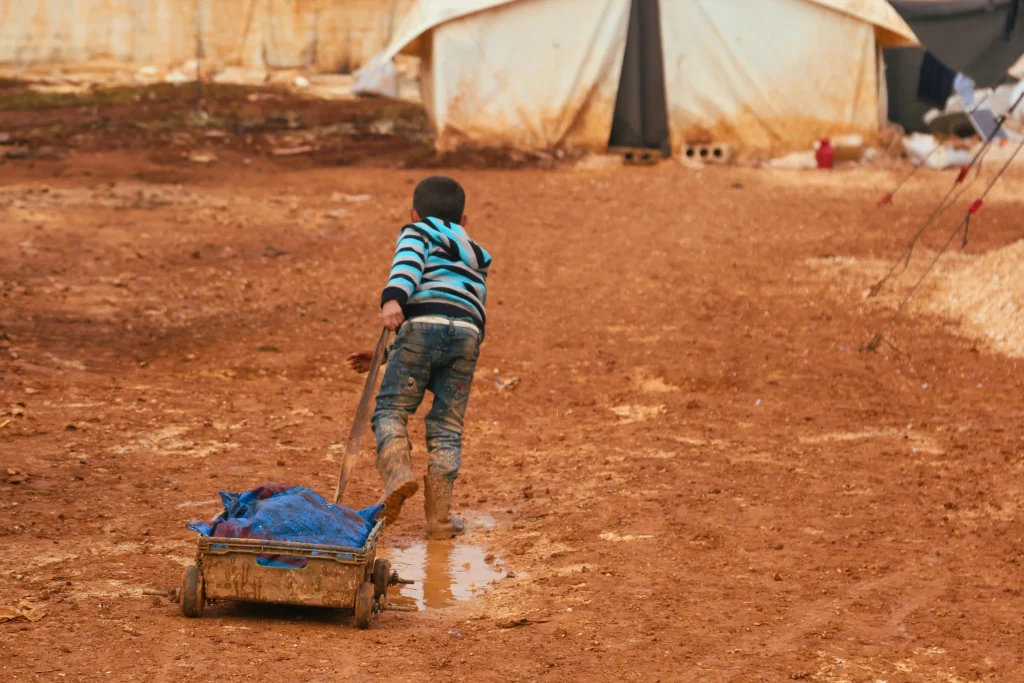
Water-related conflicts around the world have nearly quadrupled since 2020. In 2024, we had the highest number on record, 420 incidents. That is a 78% increase from 235 conflicts in recorded in 2022. This rise is driven mainly by attacks on water infrastructure and disputes over access.
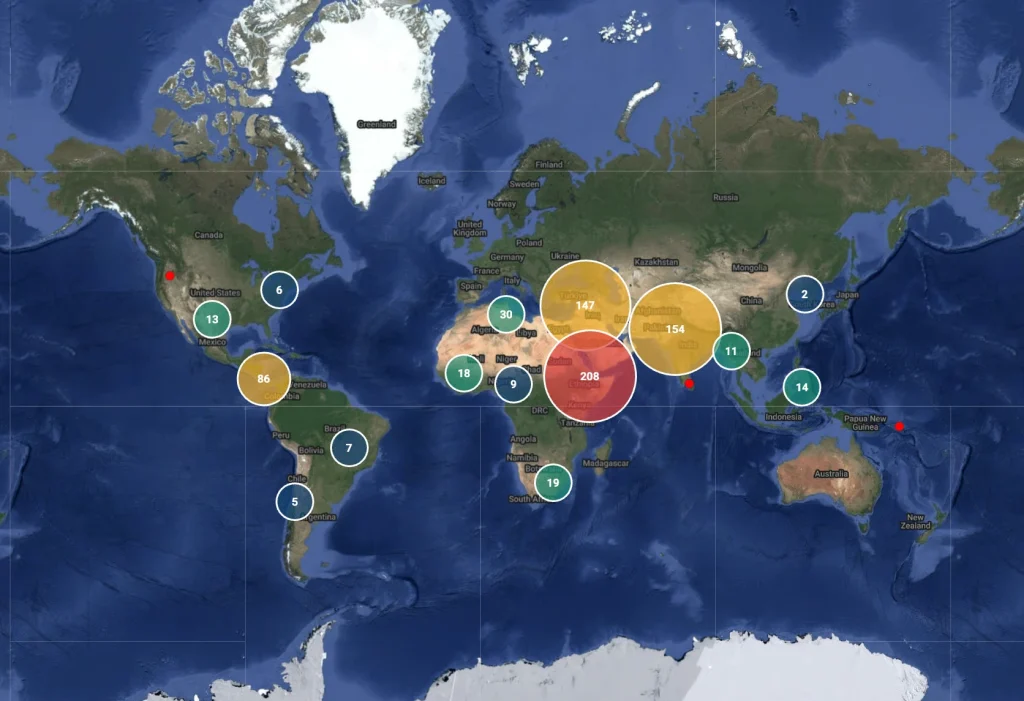
The Pacific Institute has tracked this trend for decades using their Water Conflict Chronology (see images below). It has classifies each water-related conflict as either a casualty, a trigger, or a weapon. In 2024, casualty incidents (where water infrastructure is damaged during conflict) made up the biggest portion, 55% of the total. Trigger cases (where water scarcity fuels violence) accounted for 28%, while weapon incidents (where water is used to harm opponents) were only 2%.
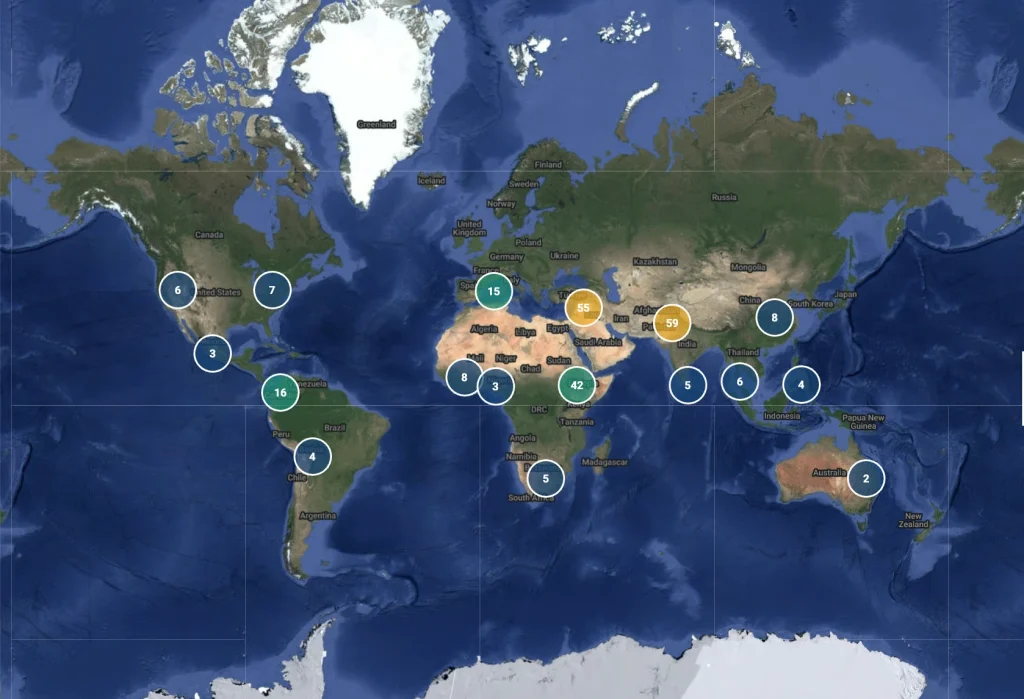
Water conflicts from 2000-2009
Water conflicts 2010-2019
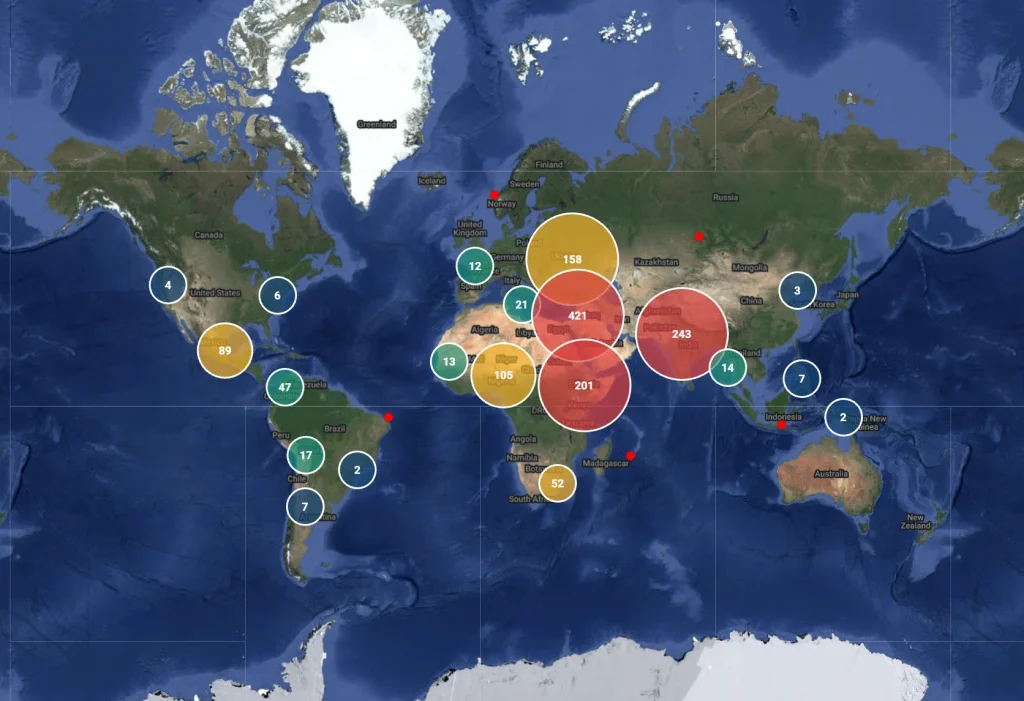
Water conflicts from 2020-2025
Some areas are under bigger threat of water-related conflicts in 2026. The sharpest stress points span war zones and water scarce states. In Palestine, up to 70% cannot collect the minimum 6 litres per person per day for drinking and cooking. In Sudan about 12 million people are displaced, and in Iran desalination plants and power networks have been damaged. The Gulf Region is another threatened area, as it relies on groundwater and desalination with no permanent rivers. Ukraine also, having lost 70% of electricity generation which disrupts water and heating.
SOMA’s Perspective:
For water-scarce regions like parts of MENA, the next few years will turn water from a service to a security variable. An interesting observation is the increase in water-related conflicts in the Middle East between the 2010–2019 map and the 2020–2025 one. But more shockingly, conflicts in Europe also begin to appear more often. This shows that water-related conflicts now affect regions once assumed to not have such problems.
Clouds Out Of Season: How Summer Rains Test Flood Defenses
#FoodandWaterSecurity
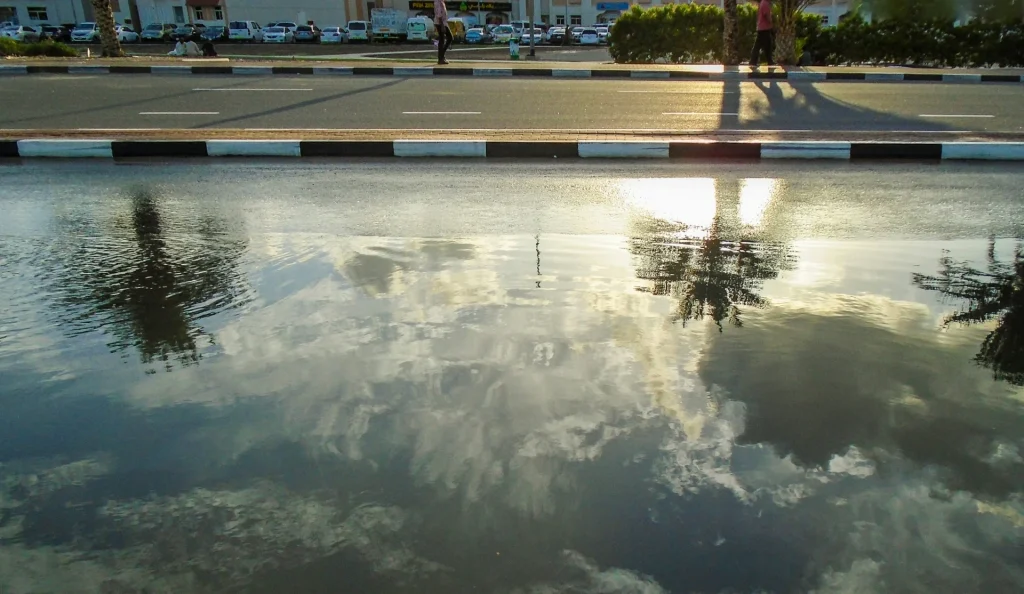
Parts of the UAE have experienced heavy rains on August 23, 2026. Rainfall in August is unseasonal based on the UAE’s main rainy season being from November to March. Yet August rainfall occurs as a summer phenomenon, particularly in eastern and mountainous areas. The National Centre of Meteorology (NCM) issued orange and yellow rain alerts across several areas, with intense downpours in the Sa’a area of Al Ain having drawn moisture from the Sea of Oman.
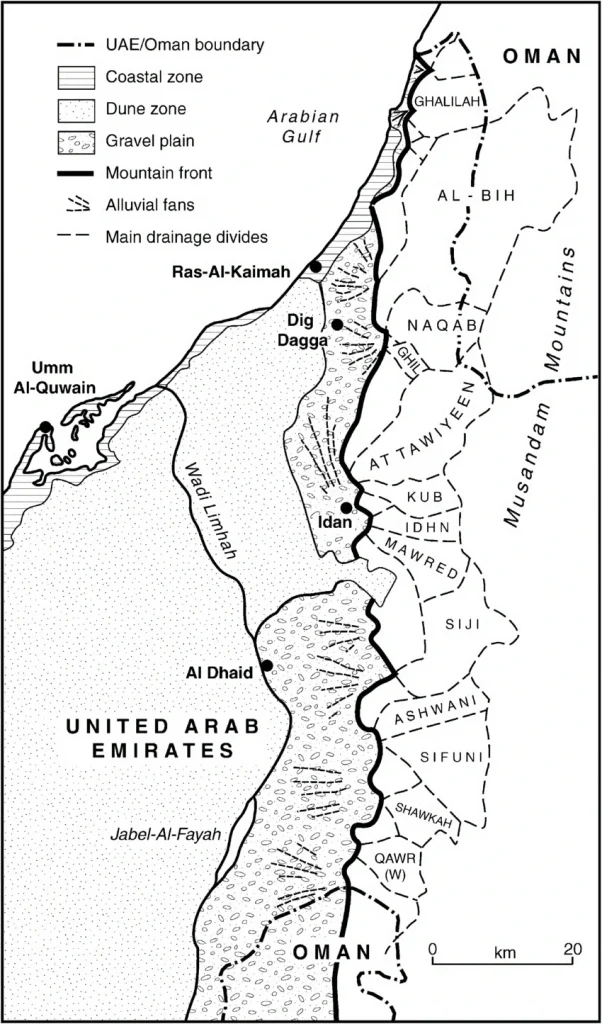
This was a result of rising temperatures meeting the influence of the eastern mountains, which built local convective clouds with variable intensity. In the UAE, rainfall movement is shaped by the country’s network of wadi catchments rather than permanent rivers. This makes it more challenging to model flooding in the country. Rain generally falls near the Hajar Mountains and fades toward the interior desert. The Gravel Plain region (see image below) captures most annual rainfall.
Drainage capacity is catching up to the climate reality. After the April 2024 floods, Dubai launched the AED30 billion Tasreef program to expand drainage capacity by 700% in phases. Phase One contracts worth AED1.439 billion were awarded in 2025 for 9 areas. In 2026, another AED2.5 billion wave followed under Phase Two for 30 more areas. Even so, heavy rain on March 2026 produced over 100mm and renewed flooding in Dubai and Sharjah. Dubai is following through on its implementation commitments, but Tasreef is a century-scale build (with full completion projected around 2033), so progress can take years.
SOMA’s Perspective:
Every time it rains in the UAE, SOMA MATER reflects on the opportunities that could be unlocked by harvesting rainwater. Yet each storm brings damage and disruption, costing both time and money. The financial impact of the 2024 Dubai floods made it the third most costly disaster worldwide that year. Large infrastructure upgrades and programs like Tasreef naturally take years. Yet as these rains become more intense, we need to pair major projects on drainage with practical runoff-reduction measures like rainwater harvesting that can be deployed now and scaled alongside project build-out. SOMA MATER has directed research focus on how nature-based approaches such as rainwater harvesting can reduce runoff by helping water infiltrate and recharge aquifers.
Debt On The Farm: Why Egypt’s Agriculture Is Losing Ground In The Economy
#FoodandWaterSecurity
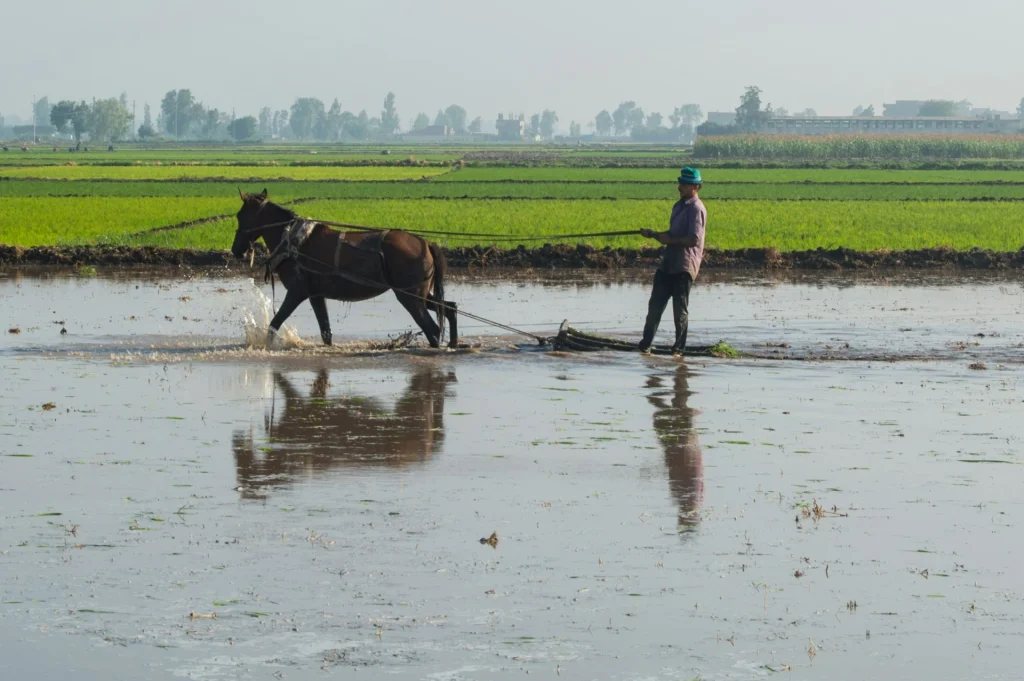
Egypt’s agriculture sector has lost economic weight over the last 5 decades. World Bank figures show agriculture’s share of GDP in Egypt peaked at 28.81% in 1974 and fell to 11% in 2025. Over the same period, Egypt’s external debt rose from around $2 billion in 1965 to around $164.8 billion in 2026. Although the sector’s value added rose from $1.27 billion in 1965 to $42.25 billion in 2020, it still falls behind other major sectors.
This is because capital and policy has shifted toward faster returns. Resource use plus policy changes plus environmental challenges is the mix behind the decline. Since the 1980s, economic liberalization policies have encouraged investment in higher-profit sectors like real estate and tourism. The expansion of other sectors has reshaped the economy, despite research showing that investment in agriculture can reduce poverty more efficiently than many alternatives.
Foreign direct investment in the country’s agricultural sector has remained below 1% of total FDI inflows. Some of the biggest structural challenges facing agriculture in Egypt today continue to be water scarcity and water management. The sector makes up about 82% of total water consumption from traditional and non-conventional sources and new agricultural technologies are often unaccessible to small farmers. Despite this, Egypt is expected to stay the Arab world’s leading wheat producer in 2026, with output forecast at about 10.2 million tons.
SOMA’s Perspective:
Egypt’s agriculture is being asked to carry the heaviest load (water use, food security, and rural livelihoods) while capital and policy reward faster-return sectors and debt tightens the fiscal space. This raises the implementation risk of productivity gains and implementing new technologies. Investment priorities and water management must shift from short-term growth optics toward resilient food systems that can absorb economic and environmental shocks.
If you’d like to know more, contact us at:
Subscribe To Our Newsletter
Categories
- Events 6
- Intelligence Reports 2
- Newsletter 29
- Uncategorized 0
- Whitepapers 6