

Soma Mater Newsletter – 16.06.2026
Welcome to the SOMA MATER weekly newsletter.
At SOMA MATER, we deliver comprehensive research and advisory services focused on Food & Water Security and Net Zero Transition in the MENA Region. To help our clients navigate these topics and understand the regional narrative, we accelerate problem-solving and unlock new opportunities through Strategic Advisory and/or Projects.
This weekly newsletter highlights the top 3 stories from the past week in Food and Water Security and Net Zero transition, along with SOMA MATER’s analysis and perspective.
What is driving governments to rebuild strategic grain reserves as part of safeguarding domestic food security?
What is driving Syria’s worsening groundwater crisis even as the Euphrates River experiences flooding?
What initiatives in the GCC region are addressing textile waste and boosting circularity in the textile value chain
Sustainably yours,
The SOMA team
Grain Games: Why Countries Are Stockpiling Again
#FoodandWaterSecurity

Global food geopolitics is changing and exposing a fragile system. Mega-mergers have cut major seed and agrochemical firms from 6 to 4. This consolidation boosts these firms’ pricing and market power. Global governance bodies like the United Nations also face budget shortfalls and legitimacy crises as countries increasingly prioritize national needs.
Governments are moving to safeguard domestic food security. Stockholding and other market tools are returning after the 1980s push to dismantle them. Countries including China, Ethiopia, India, Indonesia, and Japan are pursuing policies to lift domestic production. Brazil, India, Indonesia, and Sweden are rebuilding strategic food stockpiles as emergency reserves. Past crises explain the shift. In India, public stockholding have historically helped cushion markets during past rice-price spikes.
This is happening in Egypt. The country is expanding its strategic grain reserves, already procuring over 4.3 million tons of local wheat this season. Financial incentives, simpler procurement, and a higher purchase price of EGP 2,500 per ardeb have increased farmer participation. Strategic grain reserves need careful consideration as they can bring fiscal costs and market distortions. They work best within broader food security strategies.
SOMA’s Perspective:
We are seeing a global move towards safeguarding domestic food security. Egypt’s push to expand reserves and pay farmers more can strengthen resilience, but only if stockpiling is treated as an active system with clear volume targets, transparent rotation, and real cost discipline. It will require management of quality and circulation at scale because storage without turnover quickly loses value.
Wells Over Rivers: Why Flooding Does Not Fix Syria’s Water Crisis
#FoodandWaterSecurity
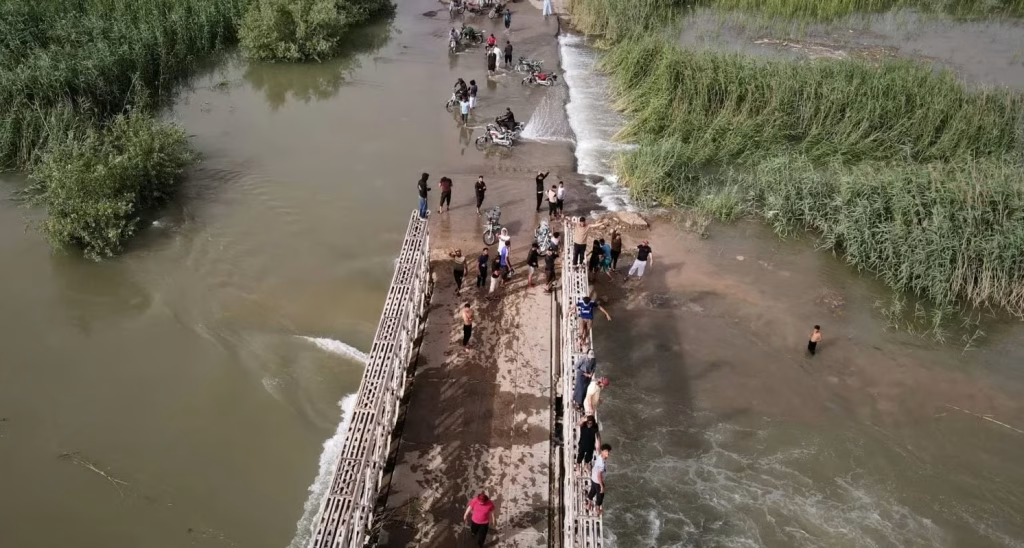
Syria faces a growing groundwater crisis as wells drain its aquifers. Syria’s groundwater crisis is driven by hundreds of thousands of illegal wells, deepening the national water “catastrophe”. Much of the illegal well digging started in the 1980s and accelerated during the civil war. The result has been the drying up of hundreds of springs and the depletion of Syria’s rivers and lakes.
The recent floods along the Euphrates River have exposed how fragile the system is. The flow began in Turkey and moved through Raqa and Deir Ezzor before reaching Iraq. It is estimated that around 2,000 hectares of agricultural land in Syria has been flooded. The flooding also knocked about 60 water pumping stations out of service and disrupted drinking water and irrigation.
Excess floodwaters on the surface do not restore Syria’s hydrological balance. Syria still ranks 12th worldwide for water stress. The illegal wells draw down the 10 billion cubic metres a year of rainwater and snowmelt that should recharge 7 underground reservoirs. Recommendations include the revision of agricultural subsidies to reduce water-intensive crops, to expand higher-return options like olives, and to keep support for wheat to rebuild self-sufficiency.
SOMA’s Perspective:
Flooding can be a misleading signal. Syria’s case shows how surface excess can coexist with structural scarcity. When aquifers are being drained by wells and recharge systems are weak, rainfall becomes a missed opportunity rather than a recovery mechanism. The policy signal is clear: without investment in managed recharge, countries will keep swaying between floods and shortages, with neither translating into resilience.
Thread To Thread: Building Textile Circularity in the Gulf
#NetZeroTransition
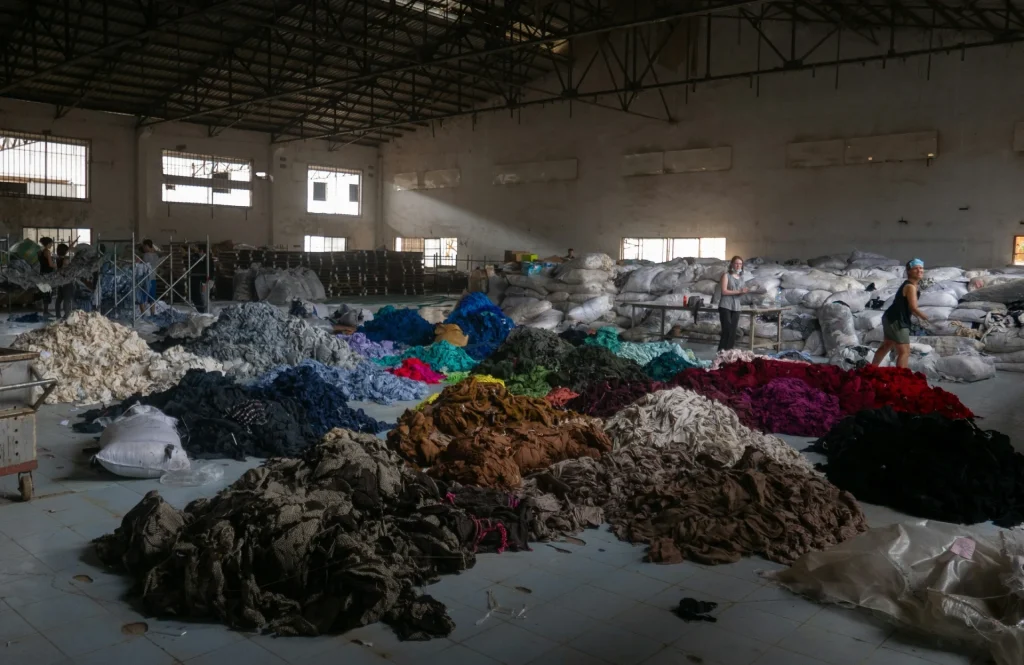
Textile waste is a growing issue. In 2024, discarded clothing reached 120 million metric tons worldwide. About 80% of this went into landfills, 12% was reused, and less than 1% was recycled into new fibers. The environmental impact is also significant. Around 20% of industrial wastewater pollution worldwide comes from the fashion industry. Just in the UAE, annual textile waste can reach up to 220,000 tonnes.
Governments in the Gulf are starting to respond. The UAE launched ‘Naseej’, the National Initiative for Textile Circularity. It was built through a partnership between the National Projects Office, the Ministry of Economy and Tourism, Emirates Foundation, and Tadweer Group. The initiative will coordinate policy, industry action, research, and public engagement across the textile value chain. Its groundwork began during COP28, and it is now positioned as a national approach for collection and recycling.
Some countries have pursued textile recovery at scale. Saudi Arabia’s Ihram initiative turns used pilgrim garments into useful resources. The system collects the used ihrams at designated points across the holy sites to be sorted, cleaned, and sterilized before reuse. In the past year, the initiative has produced over 5,000 recycled-fabric products. Today’s textile waste management infrastructure struggles to handle waste volumes. For the GCC, scaling solutions will require stronger private-sector involvement alongside government efforts.
SOMA’s Perspective:
Textile waste is fast becoming a bigger climate liability for the Gulf. Most systems still treat used clothing as a disposal problem rather than a recoverable material stream. The UAE’s Naseej and Saudi Arabia’s must translate into scaled collection, credible sorting capacity, and firm demand for recycled outputs. Countries must begin building the circular infrastructure.
Sources:
https://www.arabnews.com/node/2645345/saudi-arabia
https://www.bcg.com/publications/2025/spinning-textile-waste-into-value?
https://www.genevaenvironmentnetwork.org/resources/updates/sustainable-fashion/
https://www.recyclingexpome.com/press-releases/waste-challenge-gcc-recycling-infrastructure-t-wait
If you’d like to know more, contact us through:
Subscribe To Our Newsletter
Categories
- Events 4
- Intelligence Reports 2
- Newsletter 27
- Uncategorized 0
- Whitepapers 6