Soma Mater Newsletter – 13.07.2026
Welcome to the SOMA MATER weekly newsletter.
At SOMA MATER, we deliver comprehensive research and advisory services focused on Food & Water Security and Net Zero Transition in the MENA Region. To help our clients navigate these topics and understand the regional narrative, we accelerate problem-solving and unlock new opportunities through Strategic Advisory and/or Projects.
This weekly newsletter highlights the top 3 stories from the past week in Food and Water Security and Net Zero transition, along with SOMA MATER’s analysis and perspective.
How will grid and storage investment need to change as solar becomes the world’s largest electricity source by 2032?
How will the UAE’s Companies for Good 2031 Strategy change CSR investment and accountability across participating companies?
How will Egypt’s veal self-sufficiency push hold up if rising imported feed costs keep squeezing margins across the beef supply chain?
Sustainably yours,
The SOMA team
Solar Will Be World's Largest Electricity Source by 2032
#NetZeroTransition
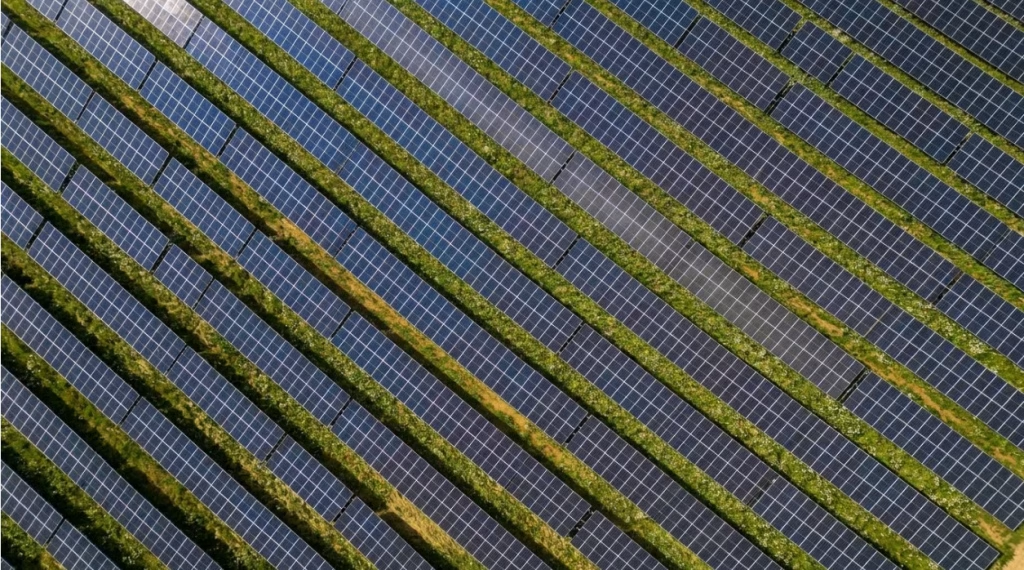
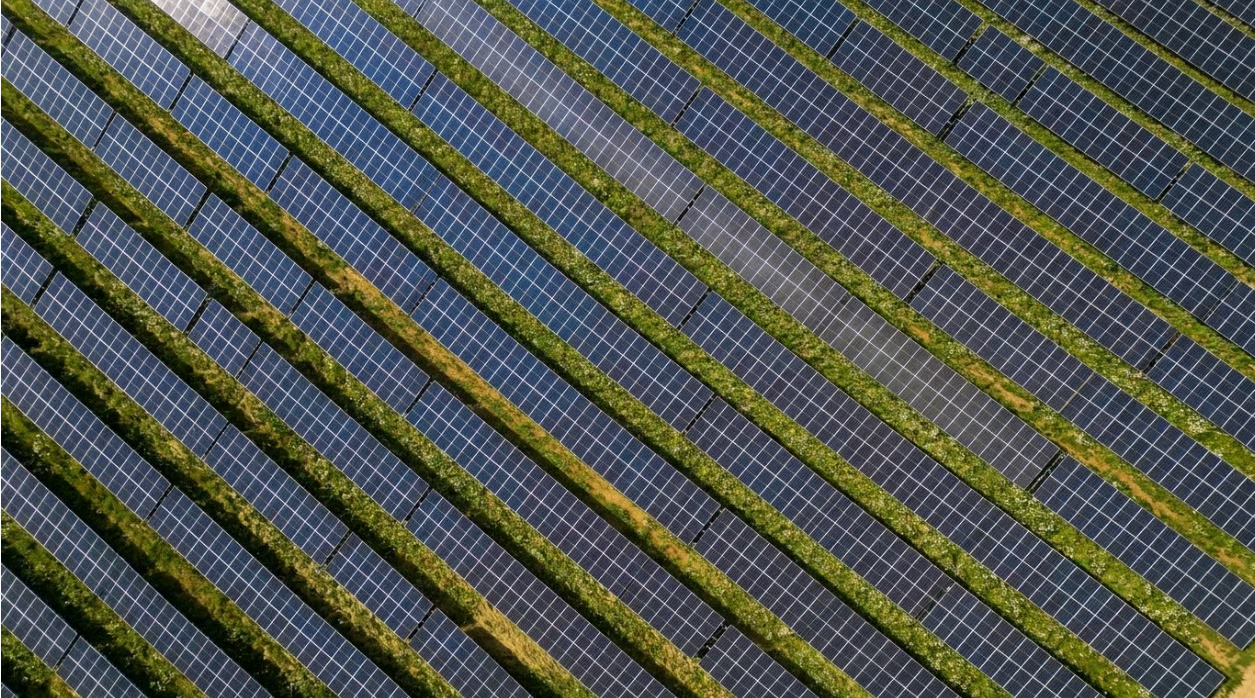
BloombergNEF‘s (New Energy Financier) New Energy Outlook 2026 says solar will become the world’s largest source of electricity by 2032. Energy shocks are pushing governments to reduce dependence on imported fossil fuels. COP31’s “35 by 35” target aims to lift electricity’s share of final energy use to 35% by 2035 from about 20% today.
The shift now depends on storage, grids and electrified demand. General Motors is entering grid-scale energy storage and expects 130,000 GM EVs to feed power back to the grid by 2030. FlexBase and Invinity are deploying non-lithium batteries under a new AI data centre complex. Heat is also turning electric as UK heat pump sales rose 27% to 125,000 units, and heat pumps outsold gas boilers in Germany for the first time.
Transport and policy are reinforcing the same direction. EV demand rose for a third consecutive month, while over a quarter of all cars sold globally in 2026 are expected to be electric. Canada launched a $1 trillion National Electricity Strategy and South Korea allocated 540 billion won ($365M USD) toward renewables. The European Commission awarded €400 million to 65 industrial heat decarbonization projects, while 90% of businesses now expect their operations to be electrified by 2035
SOMA’s Perspective:
The real tension is that solar’s rise to the top of the power mix is now constrained less by generation costs than by how quickly grids, storage, and demand can be upgraded to absorb variable supply. For governments trying to cut imported fossil dependence and hit targets like COP31’s “35 by 35,” the bottleneck shifts to building flexible infrastructure and scaling electrified end uses, from EVs to heat pumps. Our take is to watch whether storage deployments (including non‑lithium options) and vehicle‑to‑grid ambitions translate into reliable capacity fast enough to keep the transition on schedule.
Seal Of Impact: The UAE’s Companies For Good Strategy Scales Private Sector Giving
#NetZeroTransition

The UAE is betting that private sector giving can be scaled fast under the Companies for Good 2031 Strategy. The plan targets over Dh20 billion in CSR contributions in the next five years. It was launched by Sheikh Mansour bin Zayed, Vice President, Deputy Prime Minister and Chairman of the Presidential Court. The goal is to strengthen social cohesion while supporting balanced economic growth.
The baseline shows momentum is already building across companies and sectors. In 2025, the private sector delivered Dh3.23 billion in CSR projects. That activity came from 191 participating companies. The new strategy now sets a clearer path to multiply that level of contribution. Execution will run through Majra, the UAE’s national CSR fund, and it will be measured through evidence not statements.
Participating companies must show sustainable policies, including Emiratisation and carbon footprint reduction. They must also show flexible working arrangements and support for people of determination. Accountability will be reinforced through the Impact Seal, and the 2025–2027 cycle drew 160 applications with 114 organizations recognized, including Platinum winners like TAQA, ADNOC, DP World, The Emirates Group, Majid Al Futtaim Holding, RAK Ceramics, and Advanced Media Trading.
SOMA’s Perspective:
The real tension is that scaling CSR is a measurement and compliance problem, and the Companies for Good 2031 Strategy is trying to turn voluntary giving into something closer to a governed system through Majra and the Impact Seal. For businesses and policymakers, the shift from statements to evidence—paired with requirements like Emiratisation, carbon footprint reduction, and workplace flexibility—raises the bar on what “doing good” means and who can credibly claim it.
Veal Ambitions: Egypt Pumps New Funds Into Red Meat Self-Sufficiency
#FoodSecurity
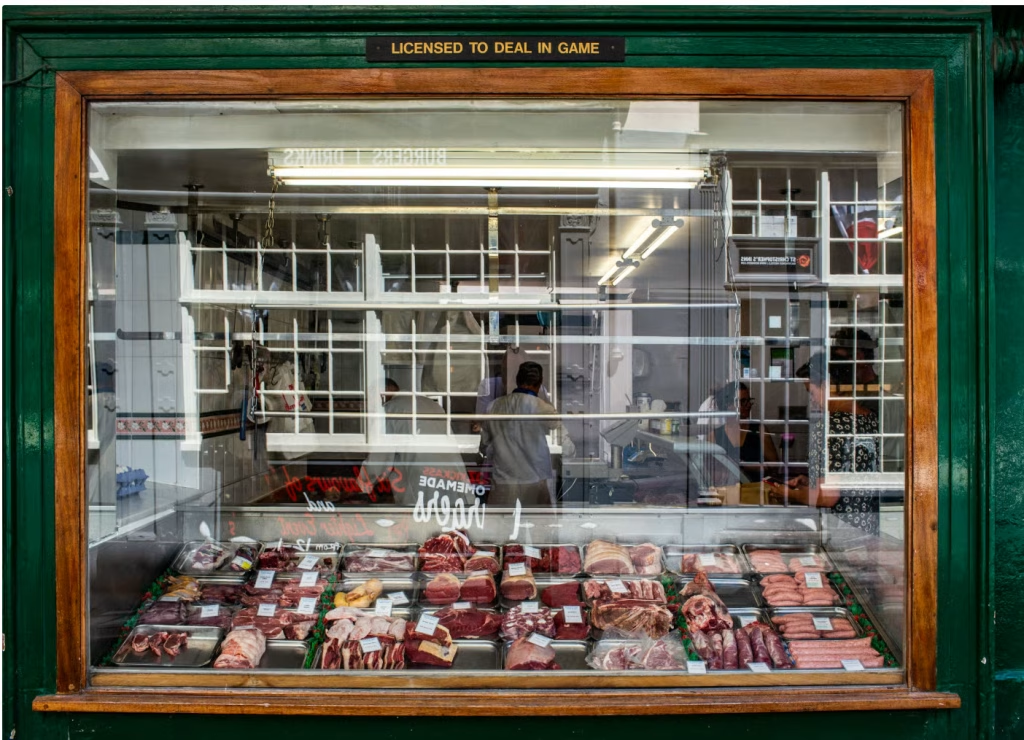
Egypt is racing to boost its domestic red meat supply as important disruptions squeeze livestock markets. The Ministry of Agriculture approved EGP 499.415 million in new funding under the National Veal Project. This project backs 372 beneficiaries, including small-scale breeders and young graduates. Since launch, total financing has exceeded EGP 11.172 billion.
Costs are rising fast across the beef supply chain, and margins are tightening. Live beef prices climbed from EGP 180/kg last year to EGP 210–220/kg today. Feed costs jumped from EGP 16,000–17,500 per ton to EGP 22,000–24,500 per ton after the Iran conflict began. That is roughly a 40% increase in a key input.
Self-sufficiency targets are advancing, but the feed bottleneck remains the main constraint. Officials are aiming for a herd of 10 million heads by 2029 while yellow corn and soybeans are still largely imported. The ministry says the program supports nearly 600,000 tons of red meat output each year, and self-sufficiency is now above 60%. Yet the project is a domestication strategy built on a foreign dependency and expanding the herd without fixing feed exposure scales the risk, not just the output.
SOMA’s Perspective:
The real constraint is the mismatch between expanding domestic herds and the cost exposure embedded in an imported-feed supply chain. For policymakers and producers, the National Veal Project’s new funding and broad beneficiary base will land in a market where live prices are rising while margins are squeezed by a sharp jump in feed costs. It’s important to watch whether implementation priorities shift from scaling animals to stabilizing inputs, because without easing feed-cost volatility, more financial risks amplify rather than reduce pressure on the beef value chain.
If you’d like to know more, contact us through:
Subscribe To Our Newsletter
Categories
- Events 3
- Intelligence Reports 2
- Newsletter 25
- Uncategorized 0
- Whitepapers 6