
Soma Mater Newsletter – 05.10.2026
Welcome to the SOMA MATER weekly newsletter.
At SOMA MATER, we deliver comprehensive research and advisory services focused on Food & Water Security and Net Zero Transition in the MENA Region. To help our clients navigate these topics and understand the regional narrative, we accelerate problem-solving and unlock new opportunities through Strategic Advisory and/or Projects.
This weekly newsletter highlights the top 3 stories from the past week in Food and Water Security and Net Zero transition, along with SOMA MATER’s analysis and perspective.
How can MENA companies turn measurable sustainability outcomes into stronger investment cases amidst changing climate rules?
How can the UAE’s expanding port-to-rail connections strengthen cargo resilience?
How can Saudi Arabia prioritize Vision 2030 projects to strengthen diversification while managing energy and water risks?
Sustainably yours,
The SOMA team
Targets Under Pressure: Why Companies Need Measurable Sustainability Results
#NetZeroTransition
Companies’ climate promises are being put to the test. Nearly 240 companies were removed from The Science Based Targets initiative list in 2024 for failing to validate targets within required timelines. Six of the largest US banks have left the Net-Zero Banking Alliance over the past 18 months. For some firms, the highest-ROI option is to invest in sustainability initiatives today as regulation is reshaping decarbonization economics. Tools like the Carbon Border Adjustment Mechanism (CBAM) will make inaction costly. For large cement producers, it could put €1 billion in annual value at stake by 2030.
Financial returns are increasingly shaping investment decisions. Unilever raised its Climate & Nature Fund commitments from €0.67 billion in 2024 to €0.76 billion in 2025, but also lowered its plastics target from 50% to 30%. The contradiction shows that companies will follow through on initiatives that deliver returns while turning back from those that don’t.
Measurable results are what determines whether sustainability earns investor confidence today. Yet companies still struggle to show these outcomes. According to BDO’s 2026 survey of over 251 sustainability professionals, 75% of respondents said they ‘required support’ to advance their sustainability agendas. 43% reported facing challenges with measuring and tracking impact. The Middle East and Africa ranked natural resource use as their top sustainability priority.
SOMA’s Perspective:
Tools like CBAM turns sustainability into a cost issue for MENA producers. Exposure is concentrated in aluminium, fertilizers, steel and other covered goods. For companies such as Emirates Global Aluminium (EGA) in the UAE, Aluminium Bahrain (Alba) in Bahrain, Ma’aden in Saudi Arabia, OCP Group in Morrocco, and Ezz Steel in Egypt, the challenge is not simply to decarbonize but to understand how emissions, export exposure and investment choices affect competitiveness and resilience. SOMA MATER helps guide leaders in these sectors to build credible measurement and practical transition strategies.
Cargo Finds Another Track: DP World and Etihad Rail Expand UAE Freight Routes
#NetZeroTransition
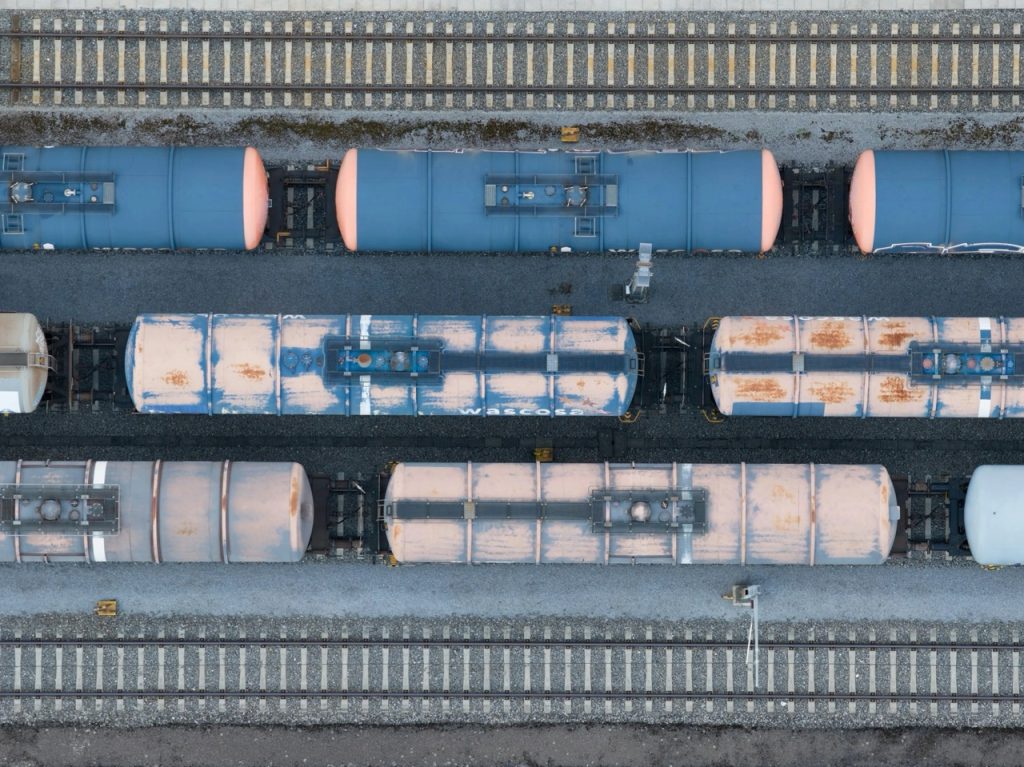
With the Strait of Hormuz closed, DP World is using operational flexibility to keep cargo moving. The company’s revenue rose 13.1% in the first half of 2026, reaching $12.7 billion. Aside from Jebel Ali (which was hit hardest by the current conflict), DP World has handled 6.5% more containers than in the same period last year. In 2026, it moved over 500,000 containers of cargo overland and now plans new terminals at Ruqaylat and Dibba.
The expansion is continuous. Etihad Rail now launched a service run by Etihad Rail Freight and AD Ports Group operating three times a week. Fujairah Terminals can now reach Industrial City of Abu Dhabi (ICAD) directly by rail, with containers that travel about 200km by rail for inspection before clearance and release. Importers, exporters, manufacturers, distributors, and logistics companies can receive cargo closer to warehouses and factories.
The free zone also received its own UN LOCODE, “AECAD”. This five-character code allows shippers to book ICAD as a destination and clearance point, moving goods faster for inspection. By 2030, Etihad Rail expects to move 60 million tonnes of freight annually. Considering that transport accounts for about 20% of global GHG emissions, shifting from road to rail connections offers greater capacity for high-volume cargo, reduced road congestion, and lower carbon emissions.
SOMA’s Perspective:
Freight decarbonization is not just a choice between diesel and electric vehicles. It is about how goods move, how efficiently vehicles are used, and which fuels carry them. In the Middle East, where much regional freight passes through ports, shifting suitable cargo from road to rail and reducing vessel waiting, truck congestion, and inefficient port-to-inland movements can improve the performance of the wider logistics system. Ports and businesses in the mobility sector will need to assess these levers together, and ensure that port and rail connections translate into more efficient, lower-carbon freight flows.
Sources:
Choosing What Comes Next: How Saudi Arabia Is Setting Vision 2030 Priorities
#NetZeroTransition
New regional risks force Saudi Arabia to prioritize some ambitions while abandoning others. First, conflict with Iran and its proxies could threaten energy infrastructure and water desalination facilities. Second, more than 60% of Saudi Arabia’s population is under 35, putting pressure on the government to meet Saudi youth expectations. Finally, the faster-than-expected growth of renewables could make Saudi Arabia’s dependence on oil increasingly unreliable.
As of September 2026, Saudi Arabia is entering the final five-year phase of Vision 2030. The 2025 Vision 2030 Annual Report shows strong implementation, but progress toward the ultimate objectives remains uneven. 225 of 1,290 active initiatives were completed, and another 935 were on track. Overall, 90% were either completed or on track. Of the 390 KPIs with activated and measured readings, 309 had achieved or exceeded their interim targets.
Current circumstances are shaping the country’s priorities. Saudi Arabia is now prioritizing projects with a clear business case and a clear contribution to national economic development goals. Although 93% of indicators achieved or nearly achieved their annual targets, diversification gaps remain. The “non-oil exports/non-oil GDP” indicator, for example, had the largest remaining gap to full implementation, with a completion rate of just 16%.
SOMA’s Perspective:
At SOMA MATER, we have tracked Saudi renewable projects underway or due by 2026, and we watch how water, energy and food intersect. We believe Saudi’s energy and oil transition must be practical: renewables serving domestic demand can free more oil for export, and desalination, cooling and heavy industry can be planned as one energy-and-water system, not separate programs. We help decision-makers measure what each project will deliver and prioritize those that lead towards resilience. The move forward for Saudi Arabia will favor resilience over just environmental claims. The opportunity is for the Kingdom to enter 2030 with fewer, better-proven projects that adjust quickly when conditions change.
If you’d like to know more, contact us at:
Subscribe To Our Newsletter
Categories
- Events 4
- Intelligence Reports 2
- Newsletter 27
- Uncategorized 0
- Whitepapers 6