Soma Mater Newsletter – 24.08.2026
Welcome to the SOMA MATER weekly newsletter.
At SOMA MATER, we deliver comprehensive research and advisory services focused on Food & Water Security and Net Zero Transition in the MENA Region. To help our clients navigate these topics and understand the regional narrative, we accelerate problem-solving and unlock new opportunities through Strategic Advisory and/or Projects.
This weekly newsletter highlights the top 3 stories from the past week in Food and Water Security and Net Zero transition, along with SOMA MATER’s analysis and perspective.
How much progress have countries made towards their 2030 and 2050 targets, and where are the biggest gaps?
How does the UAE’s growing African investments demonstrate shifting global trade policy?
How could drought become a new pressure point for countries engaging with the MENA region?
Sustainably yours,
The SOMA team
Targets Vs. Reality: Why Most Food Systems Miss The 2030 Pace
#NetZeroTransition #FoodandWaterSecurity
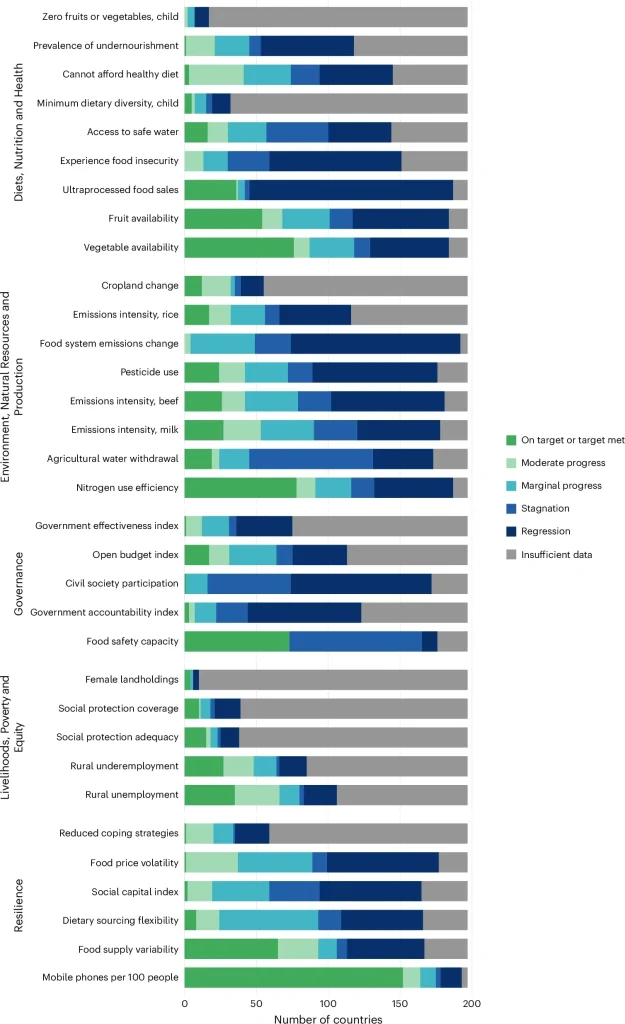
A new Nature food analysis set a hard scoreboard for food systems change. Using the Food Systems Countdown Initiative (FSCI) framework, the authors defined targets from international norms and benchmarks from top performing countries. They covered 44 indicators and calculated how far countries are from these goals and how fast they would need to improve to reach them by 2030 and 2050.
Results show a current poor state relative to global targets. The study finds that only 1 indicator (mobile phone subscriptions) has been fully met worldwide in comparison to others (see image below). It reports that 2 indicators (fisheries health index, food systems emissions change) are over 75% away from target on average. Regional/income benchmarks look more achievable but all regions still miss benchmarks for agricultural water withdrawal and pesticide use.
SOMA’s Perspective:
The diagram above shows that some food-systems performance is failing where enforcement matter most, specifically for indicators like food system emissions change and agricultural water withdrawal. Regions like Africa are bound to need the most change to meet these goals. SOMA believes the indicators that are regressing or under-measured indicate where progress can stall and can become a starting point for redesign.
Port Power Plays: How the UAE Is Contributing to Africa’s Logistics Web
#FoodandWaterSecurity #NetZeroTransition
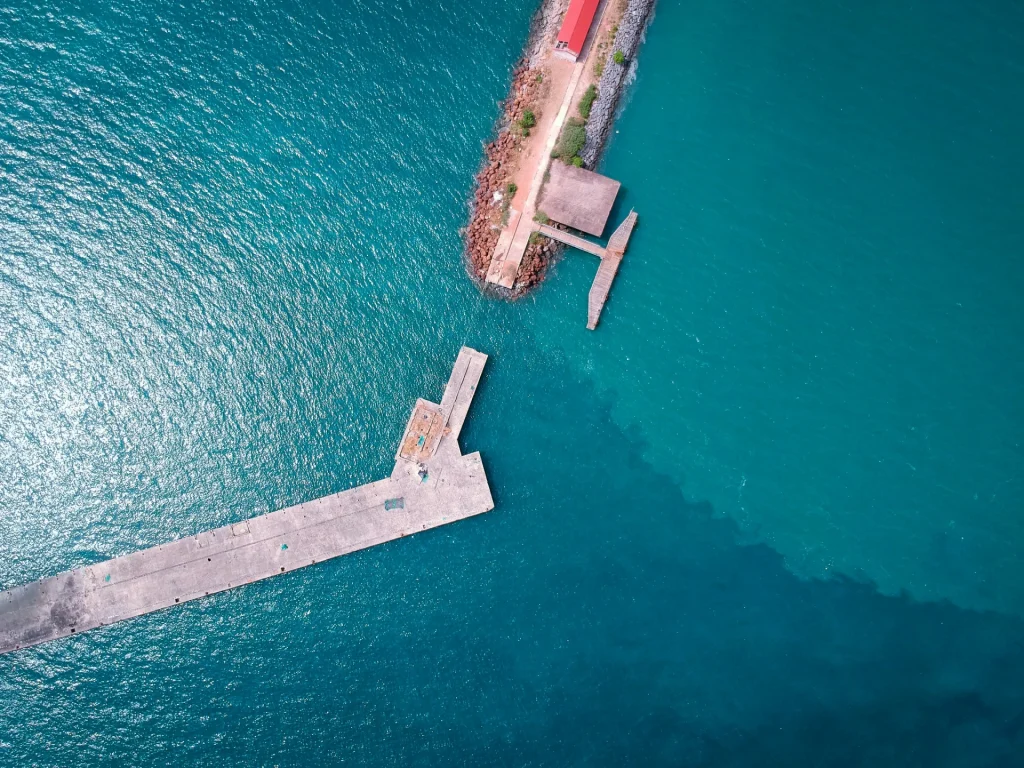
Gulf investment is becoming an important part of Africa’s trade and investment map. UAE entities have an announced pipeline of more than $168 billion in African projects since 2017, spanning mining, ports, agriculture, and green energy. The UAE is now considered a rival to China, Europe and the United States in the contest for strategic infrastructure in Africa.
The push is moving towards connected networks that control movement and value. DP World and Abu Dhabi Ports are expanding across corridors, from Mozambique’s Maputo port to plans for the Democratic Republic of Congo’s first deep water port. The biggest prize is control over the routes through which African commodities and imports move, and DP World already operates or is developing sites in 13 African countries.
This level of partnership is also strategic in food trade. Trade will become a major resilience strategy as the world will need to feed 10 billion mouths by 2050. Research shows there is a link between trade and a positive association between agricultural trade and both the affordability of a healthy diet and dietary diversity. Yet these gains still depend on basic infrastructure like roads, storage, finance and market information. Risks can still remain high when a country relies on the same port, transport corridor or fertilizer hub.
SOMA’s Perspective:
Food-security resilience depends more on whether trade routes, inputs, and logistics are diversified enough to withstand political or commercial shifts. When investment consolidates ports, corridors, and fertilizer hubs into a few connected networks, it can still hard-wire single points of failure into supply chains. Governments and businesses need to build redundancy with alternative routes rather than assuming today’s alignment with other regions will hold when conditions change.
The Drought Nexus: How GERD Tensions Spill Into Other Areas
#FoodandWaterSecurity

Countries are working to maintain stable relations in a region with rising water tensions. Donald Trump’s top Africa adviser, Massad Boulos, met in Cairo with the foreign ministers of Egypt, Eritrea, and Somalia. He said Washington seeks workable relations with every capital and denied the United States is building an anti‑Ethiopian bloc. Yet, mistrust among the countries involved continues growing. Countries like the United States have a delicate balancing act in this increasingly sensitive region.
At the center of this is the Grand Ethiopian Renaissance Dam (GERD). The dispute has shifted from construction to drought-time releases. Officials debate whether any release commitments will be binding, and whether they hold during a drought. There may be the need for stronger multilateral track with these regional partners. At the global level currently, the United Nations Convention to Combat Desertification (UNCCD) is the only legally binding framework that integrates land management, desertification, and drought.
Drought must be reframed as a system-wide risk. The UNCCD argues drought should be treated as a nexus that links water, food security, energy, health, migration, and governance. The costs are already great: estimates put global drought damages at over $60 billion annually. Investing early in drought warnings, regenerative agriculture, and groundwater governance has proven to be more cost-effective than responding only after a crisis.
SOMA’s Perspective:
Water diplomacy in the MENA region (especially around the Nile) is becoming a bargaining chip that can turn decisions into geopolitical leverage. For businesses and policymakers, that raises the cost of assuming stable water access and makes resilience planning across food systems, energy, and investment more dependent on how countries manage scarcity and cross-border trust.
If you’d like to know more, contact us through:
Subscribe To Our Newsletter
Categories
- Events 4
- Intelligence Reports 2
- Newsletter 27
- Uncategorized 0
- Whitepapers 6